
KPI Reporting for SMEs in Truckee & Lake Tahoe: What to Track (and What to Ignore)
For growing businesses in Truckee and the Lake Tahoe region, scaling is rarely linear. Revenue surges during peak tourism seasons and softens in the shoulder months. Staffing ramps up quickly, then contracts just as fast. Operations that work in February can break under pressure in July. What feels manageable at one stage becomes chaotic at the next.
In this context, relying on intuition or reactive decision-making is not just inefficient; it is risky. This is where KPI reporting for SMEs becomes critical. The right performance metrics give business owners clarity in the middle of volatility. They allow you to anticipate cash gaps before they happen, identify operational bottlenecks during peak demand, and make decisions based on real data rather than assumptions.
But most businesses in this region face the same issue. They are either not tracking KPIs at all or they are tracking too many metrics that do not actually drive decisions. The advantage is not in more data. It is in the right data, used consistently.
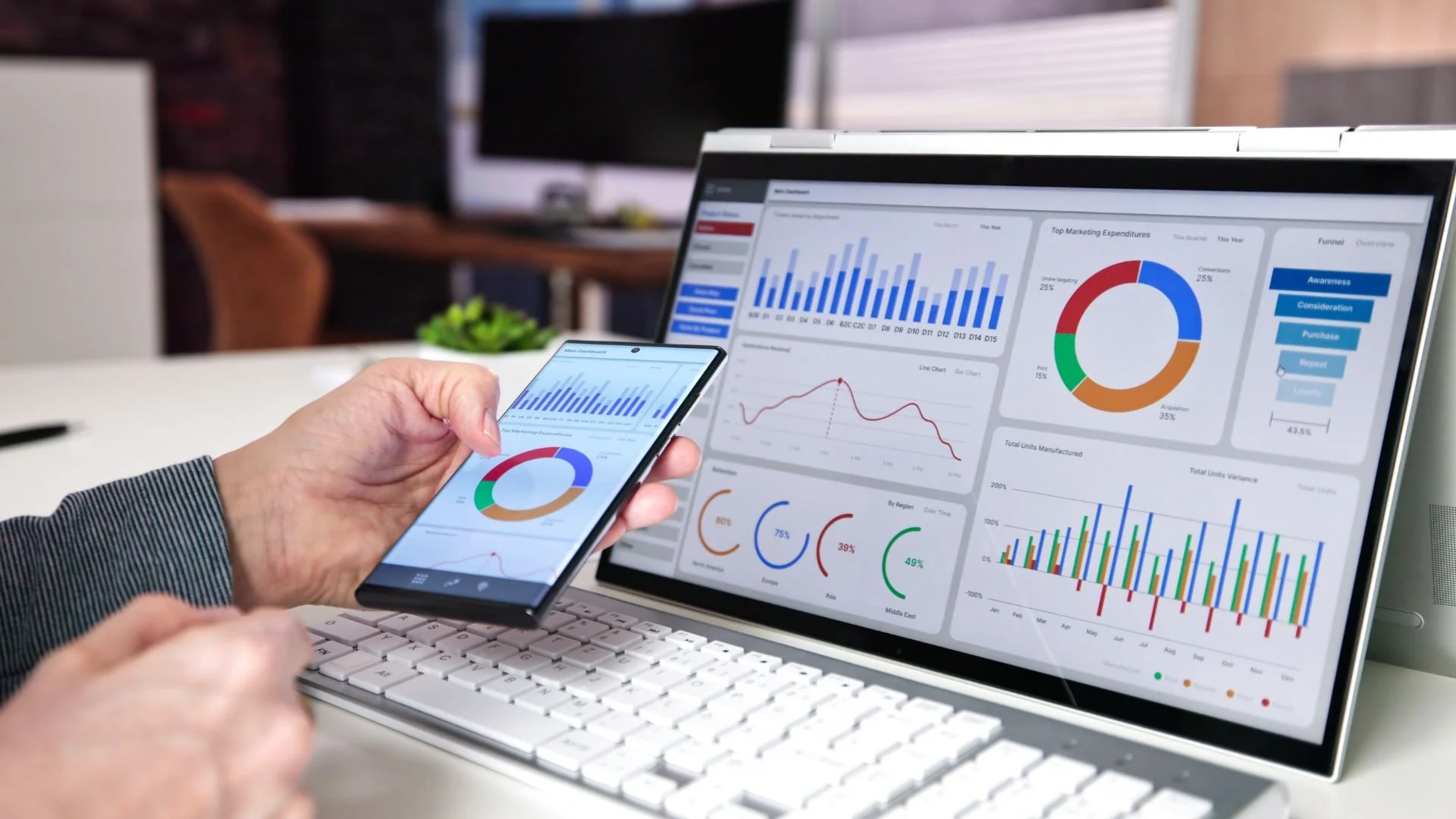
Why KPI Reporting Matters More in Seasonal Markets
Truckee and Lake Tahoe are not typical operating environments. Tourism-driven demand creates compressed revenue windows where a large portion of annual income is generated in just a few months. That puts pressure on cash flow, staffing, inventory, service delivery, and leadership capacity.
Research from McKinsey & Company shows that SMEs operate at roughly 50 percent of the productivity levels of larger firms, largely due to gaps in systems and performance management. In seasonal economies, that gap widens because inefficiencies are amplified during peak periods.
According to PwC, companies that embed data-driven decision-making into their operations consistently outperform peers by 5% in productivity and 6% in profitability. In a region like Tahoe, structured KPI reporting for SMEs acts as a stabilizing system that allows businesses to navigate variability with greater control.
KPI Reporting for SMEs: What Actually Matters in Truckee & Tahoe
Most growing businesses do not need complex dashboards. They need a focused set of KPIs tied directly to revenue drivers, operational capacity, and customer behavior in a seasonal environment.
Deloitte’s research shows that high-performing organizations concentrate on a small number of value drivers across financial performance, operations, and customer outcomes. For businesses in Truckee and Lake Tahoe, these categories create the foundation for clarity and scalable growth.
Effective KPI reporting for SMEs should answer three questions consistently:
Is the business financially stable across seasons?
Can operations handle peak demand efficiently?
Are customers generating long-term value?
Financial KPIs: Managing Seasonality and Cash Flow Risk
In this region, Truckee & Lake Tahoe, revenue alone is a misleading indicator of success. A strong peak season can hide underlying issues like margin compression, inconsistent cash flow, or poor cost control during off-peak months. That is why financial KPIs must focus on stability, not just growth.
Key metrics include:
Revenue consistency across seasons, not just total annual revenue
Gross margin by service line or revenue stream
Net profit margin during both peak and off-peak periods
Cash flow forecasts and liquidity position
Accounts receivable timing and collection cycles
Break-even point during slower months
Cash visibility is particularly critical. Data from the JPMorgan Chase Institute shows the median small business holds only about 27 days of cash reserves. For a Tahoe-based business entering a slow season, that margin for error is extremely tight.
Without structured KPI reporting for SMEs, many businesses only realize there is a problem when cash is already constrained. The goal is to ensure that peak-season revenue translates into year-round stability.
Operational KPIs: Surviving Peak Season Without Breaking Systems
If financial KPIs tell you what is happening, operational KPIs explain why. In Truckee and Lake Tahoe, operations are where most growth breaks down.
Peak seasons stress-test everything:
Staffing capacity
Service delivery timelines
Vendor coordination
Internal communication
Businesses that lack structured operational visibility often experience the same cycle. Strong demand is followed by execution breakdowns, customer dissatisfaction, and team burnout.
Key operational KPIs include:
Capacity utilization during peak periods
Revenue per employee or per labor hour
Service delivery timelines or job completion rates
Cost per project, service, or unit
Schedule efficiency and downtime
Inventory or supply turnover
According to PwC, operational performance metrics are increasingly seen as leading indicators of long-term success, yet they remain underdeveloped in many SMEs. This is where KPI reporting for SMEs becomes a practical tool for improving execution, not just measurement.
Customer KPIs: Turning Seasonal Demand into Long-Term Value
In tourism-driven economies, customer acquisition is often expensive and inconsistent. That makes retention one of the most underutilized growth levers. Many Tahoe businesses focus heavily on attracting new customers each season but fail to measure whether those customers return, refer others, or increase lifetime value.
Key customer KPIs include:
Customer acquisition cost
Customer lifetime value
Repeat customer rate across seasons
Booking or purchase frequency
Conversion rates from inquiries to confirmed sales
Research from Harvard Business Review shows that increasing customer retention by just 5 percent can increase profits by 25 to 95 percent. For Tahoe businesses, returning customers reduce marketing costs, improve predictability, and stabilize revenue across seasons.
What to Stop Tracking
One of the biggest issues we see with growing businesses is over-measurement. More data does not create better decisions. It often creates confusion. In fact, data overload is a major barrier to effective performance management.
Common low-value metrics include:
Social media impressions without revenue attribution
Website traffic without conversion tracking
Total revenue without margin visibility
Overly detailed operational data that does not influence decisions
If a metric does not directly inform an action, it should not be a priority. Clarity comes from focus.
Leading vs Lagging Indicators: The Difference Between Reactive and Proactive
Many businesses rely heavily on lagging indicators, which measure outcomes that have already occurred. These include revenue, profit, and completed sales. By the time these numbers are available, the opportunity to influence them has already passed.
Leading indicators provide forward visibility and allow businesses to act earlier.
Examples include:
Sales pipeline activity and bookings
Conversion rates
Staffing capacity and scheduling coverage
Operational throughput during peak periods
McKinsey research shows that organizations using forward-looking metrics significantly improve responsiveness and performance. In a seasonal market, this distinction determines whether you are reacting to past performance or preparing for what comes next.
Building a KPI System That Actually Works
The effectiveness of KPI reporting is not about the metrics themselves. It is about how they are used.
High-performing businesses in Truckee and Lake Tahoe tend to:
Tie KPIs directly to revenue drivers and operational realities
Maintain consistent reporting cadence
Keep metrics simple and decision-focused
Share data across leadership teams
According to PwC, organizations that align KPIs with strategy execute more effectively and adapt faster to changing conditions. This is where KPI reporting for SMEs becomes part of the operating system, not just a reporting layer.
The Role of KPI Reporting in Scaling a Tahoe-Based Business
As businesses grow in this region, complexity increases quickly. More staff, more customers, more variability, and more pressure. Without structured KPI systems, growth often leads to cash flow strain during off-peak periods, operational inefficiencies during peak demand, and founder bottlenecks that slow decision-making.
KPI reporting creates alignment between financial performance, operations, and customer outcomes. It gives leadership teams visibility into what is driving results and where breakdowns are occurring. In a market as dynamic as Truckee and Lake Tahoe, that level of clarity becomes a competitive advantage.
Build KPI Systems That Support Sustainable Growth
At Build the Framework, we work with growing businesses across Truckee and Lake Tahoe that are experiencing exactly this challenge. They are generating demand and scaling, but lack clarity on what is driving performance and where systems are under pressure.
We design KPI systems that go beyond reporting and function as part of how your business operates. That includes identifying the right metrics for your business model, building consistent reporting processes, and ensuring that insights translate into action.
When implemented correctly, KPI reporting for SMEs removes guesswork, improves execution during peak periods, and creates stability across seasons. It turns fragmented data into a clear decision-making framework that supports sustainable growth in a highly variable market like Truckee and Lake Tahoe.
If your business is scaling but feels increasingly complex, the issue is rarely effort. It is the structure. A well-built KPI system gives you the visibility and control needed to grow with confidence.
Schedule a consultation with Build the Framework to discover how a structured KPI system can help your business make smarter decisions and scale with clarity and confidence.
